Lingoda review 2026
Lingoda is worth it for structure, not for the cheapest or most flexible English practice
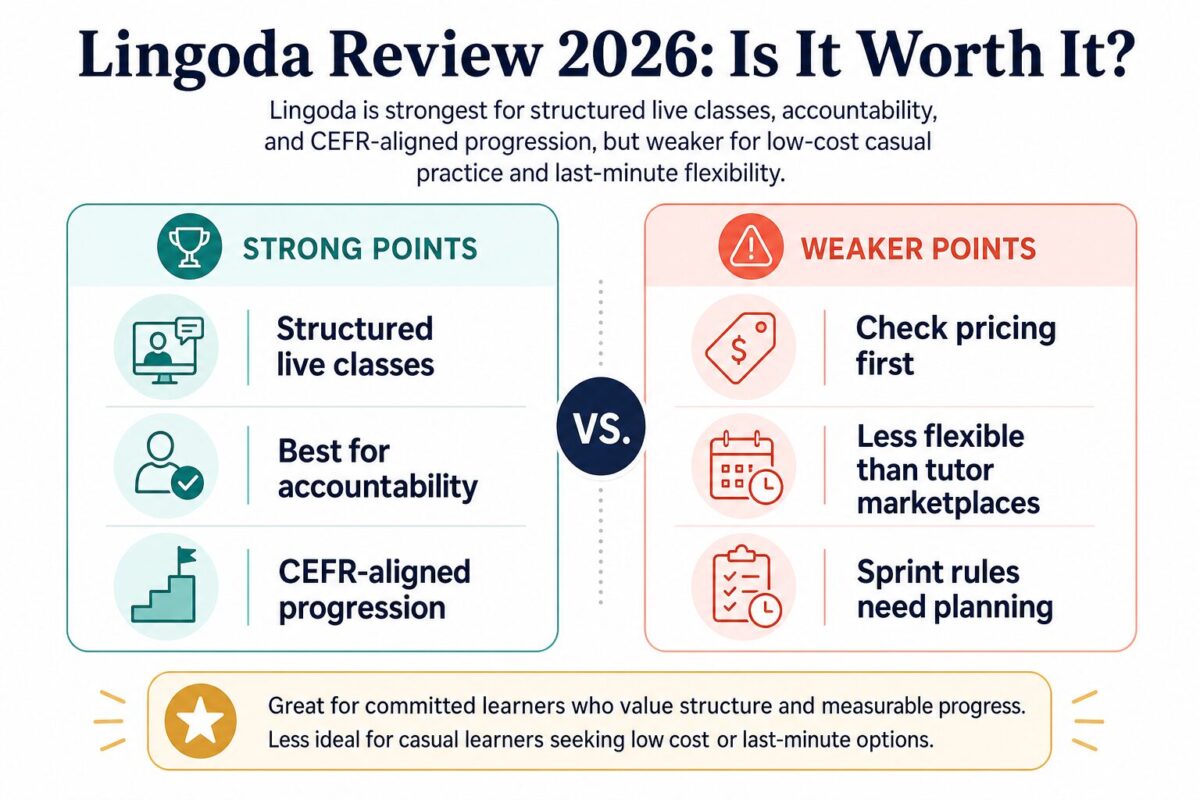
Lingoda can be a strong choice if you want live online English classes, a CEFR-aligned curriculum, a fixed study rhythm, and teachers who keep you accountable.
It is less convincing if you mainly want the lowest monthly cost, instant drop-in lessons, or a casual conversation app.
This Lingoda review explains pricing, the 7-day trial, Sprint rules, Trustpilot review checks, pros and cons, cancellation risk, and who should use Lingoda in 2026.
The practical answer is simple: choose Lingoda when structure is the product you are paying for.
Lingoda is most worth it for busy learners who can book classes ahead, follow a weekly routine, and use a real curriculum.
If your schedule changes every day, compare it with more flexible tutor marketplaces or drop-in speaking options before paying.
You want live classes, clear levels, teacher feedback, and a reason to show up each week.
Plan prices and trial terms can change, so verify the checkout screen before entering payment details.
Lingoda is booking-based. That can help accountability, but it is not the same as taking a class whenever you feel like it.
Empathy check
You are probably not asking whether Lingoda is good. You are asking whether it is safe to pay for.
A lot of Lingoda searches come from people who are already interested but hesitant. The common worries are predictable.
Is the 7-day trial really useful? Will the subscription renew automatically? Are the prices clear? Are Sprint rules too strict? Are Trustpilot reviews enough?
Those are the right questions. Online language platforms can look similar, but the experience changes with booking rules, class length, teacher style, and structure.
I would not treat Lingoda as a magic speaking shortcut. I would treat it as a structured class system. That framing makes the decision much easier.
Who it is for
Lingoda is a good fit when you want live classes to force consistency
Lingoda’s core value is not just that classes are online. The value is that you enter a structured learning environment.
You book a class, join at the scheduled time, use lesson materials, speak with a teacher, and keep progressing through levels.
That matters if you have tried apps, YouTube lessons, or self-study books and still avoid speaking. A booked class creates a deadline.
A teacher creates accountability. A curriculum reduces the mental work of deciding what to study next.
Lingoda is likely worth it if…
- You want teacher-led English classes, not only conversation prompts.
- You can reserve class times in advance and protect those times.
- You like a level-based curriculum instead of choosing every topic yourself.
- You want group classes or private classes with a school-like format.
- You are willing to compare plan cost against your real weekly schedule.
Lingoda may disappoint you if…
- You need instant lessons with no advance booking discipline.
- You only want the cheapest possible speaking time.
- You prefer choosing one favorite tutor and staying with that person.
- You dislike 60-minute classes or structured lesson material.
- You are joining Sprint mainly for cashback without reading every rule.
Pricing 2026
How Lingoda pricing works: compare cost with your real class capacity
Lingoda pricing is usually built around class type, class count, and renewal cycle. The official pricing page may show group-class and private-class options.
Larger plans can lower the per-class cost, but they also require more class time during the month.
That is why the best Lingoda pricing question is not “What is the cheapest plan?” It is “How many classes can I realistically attend without wasting credits or rushing through lessons?”
| Pricing question | What to check | Why it matters |
|---|---|---|
| Group or private? | Group classes are usually lower cost per class. Private classes usually cost more but give more direct speaking time. | Group can be better for accountability and value. Private can be better when you need targeted correction. |
| Small or large plan? | Higher class counts can reduce per-class cost, but only if you attend those classes. | A larger plan is not better if your calendar is already overloaded. |
| Renewal timing? | Check whether the plan renews every four weeks or monthly in your checkout flow. | Billing timing affects how you plan classes and cancellation reminders. |
| Credit rollover? | Read the current rules for unused class credits before assuming they are safe forever. | Rollover can help, but it should not replace a realistic study schedule. |
| Refund policy? | Check the official refund and trial cancellation terms before paying. | Refund wording can depend on class usage, plan type, and timing. |
If you can only attend one class most weeks, do not buy a high-volume plan just because the per-class number looks better. Lingoda value depends on classes you actually take.
7-day trial
Use the Lingoda trial to test the class system, not just the homepage
Lingoda’s 7-day trial is useful only if you use it actively. The key is to book real classes, check available time slots, and test the class format.
Confirm whether you prefer group or private lessons. Also check what happens when the trial ends.
The official trial language may include a limited number of classes, such as group or private trial credits depending on the selected plan.
The important point is not the word “free.” The important point is whether you know when billing starts and how to cancel if you decide not to continue.
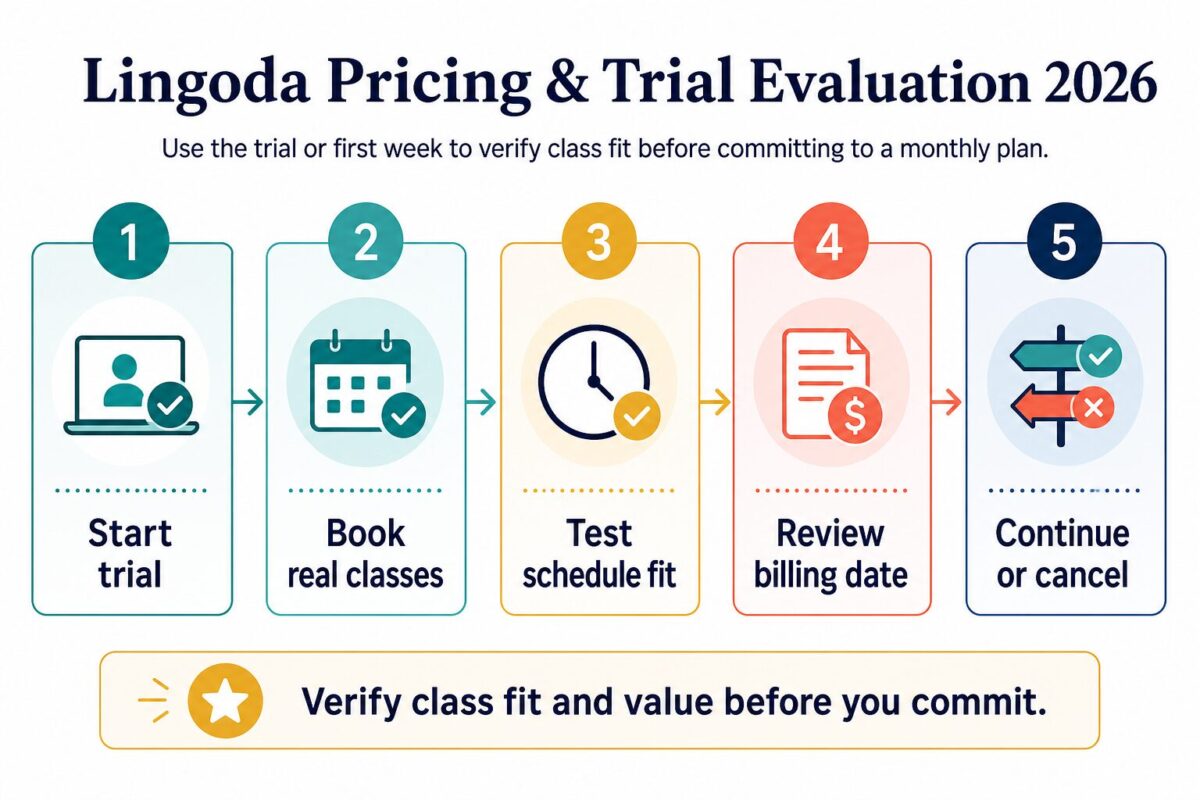
Do not wait until the trial is almost over. Book classes early so you can judge availability and class quality.
Choose class times you would actually use after paying. A convenient trial slot is not enough.
Put a reminder before the trial ends. Decide to continue or cancel based on evidence, not forgetfulness.
Class experience
What Lingoda classes feel like in practice
Lingoda classes feel more like an online school than a random chat platform. You are usually working through a lesson topic with a teacher and structured material.
That can be excellent if you want progression. It can feel less spontaneous if your goal is casual free conversation.
For English learners who freeze when speaking, this structure can help because the class gives you a topic, a teacher, and a clear time box.
You do not have to invent the entire lesson. You only have to show up and participate.
A busy professional might use Lingoda twice a week: one class for structured grammar or vocabulary practice, one class for speaking confidence.
That is a better plan than buying too many credits and hoping motivation appears later.
Group classes vs private classes
Group classes can feel more affordable and less intense. You hear other learners, notice common mistakes, and get used to speaking in front of people.
Private classes are more focused and give you more speaking time, but they usually require a higher budget.
If you are new to Lingoda, group classes can be a reasonable first test. If you already know your weak points, private classes may give clearer value.
Sprint rules
Lingoda Sprint can be valuable, but it is not the safest first step for everyone
Lingoda Sprint is designed around commitment. Recent official Sprint messaging describes a two-month challenge with 15 or 30 live online classes per month.
The reward may be cashback or class credits when participants complete the challenge and follow the rules.
That can be motivating. It can also be risky if your schedule is unstable. Sprint rules are cohort-specific and can be strict.
Do not join because a cashback headline looks attractive. Join only if the actual rules fit your calendar.
Read your exact Sprint rule document before paying
The safest approach is to open the official rules for the exact Sprint cohort you are joining.
Check cancellation timing, class limits, qualifying credits, attendance requirements, reward type, and post-Sprint subscription handling.
Sprint makes sense when…
- You can reserve class times far ahead.
- You rarely cancel lessons at the last minute.
- You want external pressure to keep learning.
- You can follow rule details without guessing.
Skip Sprint when…
- Your work or family schedule changes suddenly.
- You are new to Lingoda and have not tested normal classes.
- You would be upset if cashback is denied.
- You do not want to manage cancellation windows carefully.
Trustpilot and reviews
How to read Lingoda Trustpilot reviews without overreacting
Search data shows interest in Lingoda Trustpilot ratings and reviews. That makes sense, but do not treat one rating number as the whole decision. Reviews are most useful when you read for patterns.
Look for repeated comments about class availability, teacher consistency, billing communication, cancellation experiences, customer support, and Sprint rules.
A single glowing review or angry review may not match your situation. A repeated pattern is more useful.
| Review pattern | What it may mean | How to verify it yourself |
|---|---|---|
| Teacher quality praise | Learners may value structured lessons and feedback. | Use trial classes to test teacher style and class pacing. |
| Billing complaints | Some learners may misunderstand renewal or cancellation timing. | Screenshot your plan page and set reminders before renewal. |
| Sprint frustration | Cashback rules may be stricter than expected. | Read the cohort rule document before joining Sprint. |
| Schedule complaints | Available times may not fit every region or level. | Search class availability during the hours you will actually study. |
Before paying
Verify these five things before you choose a Lingoda plan
Lingoda is easiest to judge when you turn the decision into a checklist. If all five checks pass, the platform is a serious option. If two or more fail, compare alternatives before paying.
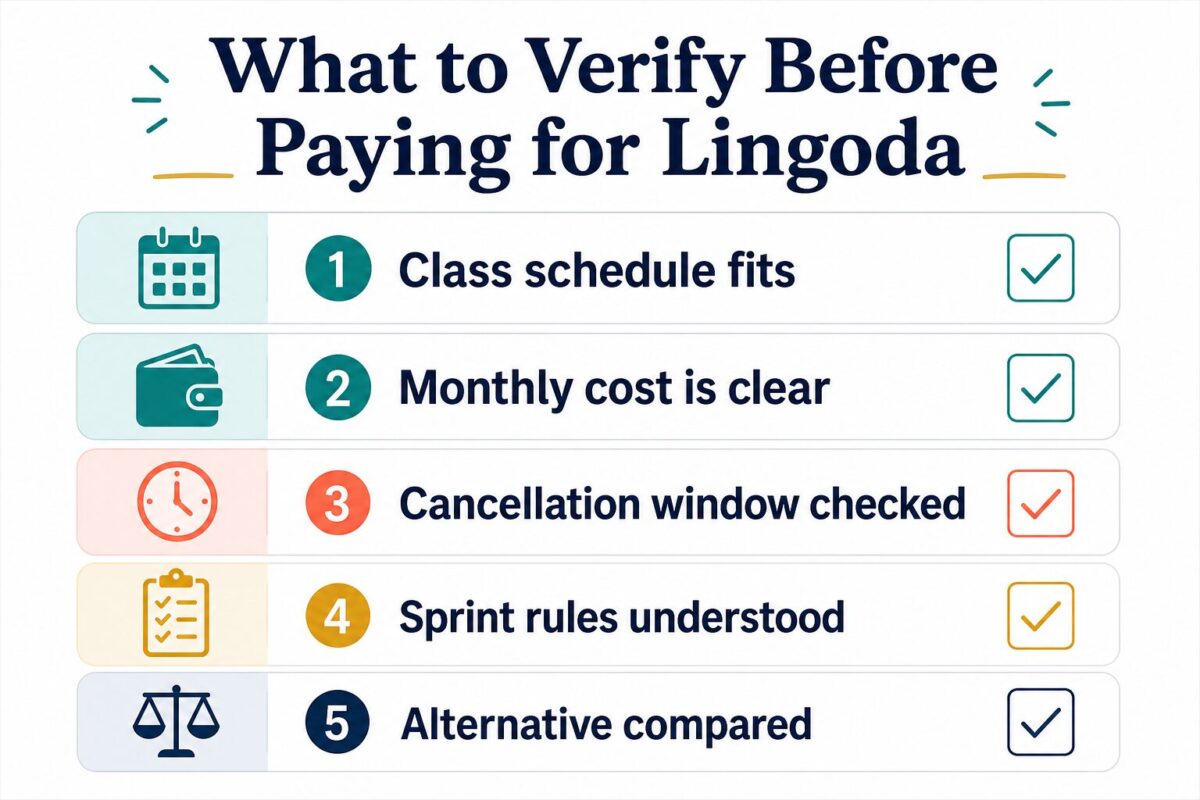
The five checks
- Your preferred class times have enough availability.
- The plan cost fits your monthly budget without needing cashback.
- You understand trial cancellation and subscription renewal.
- You know whether Sprint rules are relevant to your plan.
- You have compared at least one more flexible alternative.
My recommendation
Start with the smallest plan or trial path that lets you test real classes. Upgrade only after you know your schedule, your class preference, and your tolerance for booking rules.
Alternatives
Compare Lingoda with alternatives by learning style, not brand name
Lingoda is not competing only with other online schools. It is also competing with tutor marketplaces, drop-in conversation platforms, self-study apps, and local classes.
The right comparison depends on what you need most.
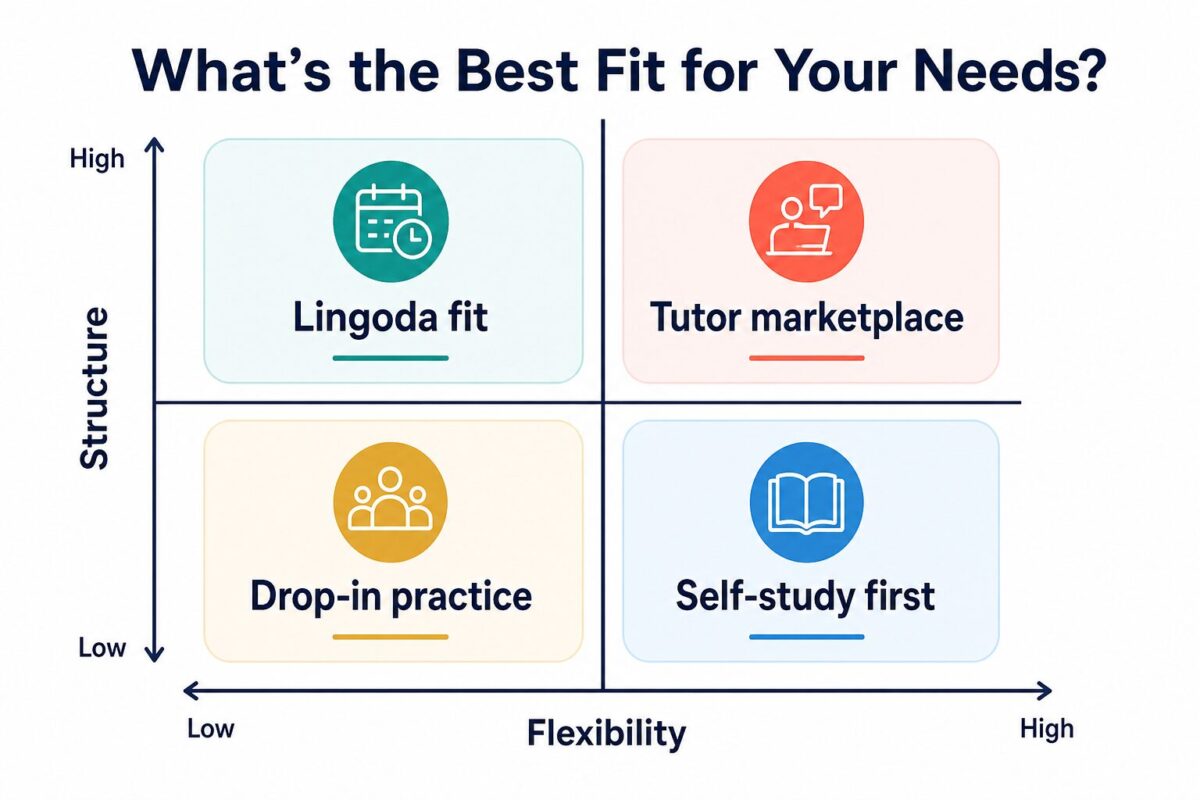
| Your priority | Lingoda fit | What else to compare |
|---|---|---|
| Structured curriculum | Strong fit because lessons are level-based and teacher-led. | Other school-style online programs. |
| Maximum speaking volume | Good if you book enough classes, but not instant drop-in practice. | Conversation-first services and unlimited-style platforms. |
| Specific tutor match | Mixed fit because the school model matters more than one tutor relationship. | Preply, italki, or other tutor marketplaces. |
| Lowest budget | Not the obvious winner unless you use every class well. | Self-study plus occasional tutoring. |
Common mistakes
The biggest Lingoda mistake is choosing a plan before choosing a routine
Most Lingoda problems start before the first class. A learner sees a trial, a discount, or a Sprint reward and chooses a plan before checking their actual calendar. That creates pressure later.
A safer path is to design the routine first. Decide which days you can attend and whether group classes feel acceptable.
Then check whether 60 minutes is realistic and whether you are comfortable with booking and cancellation rules.
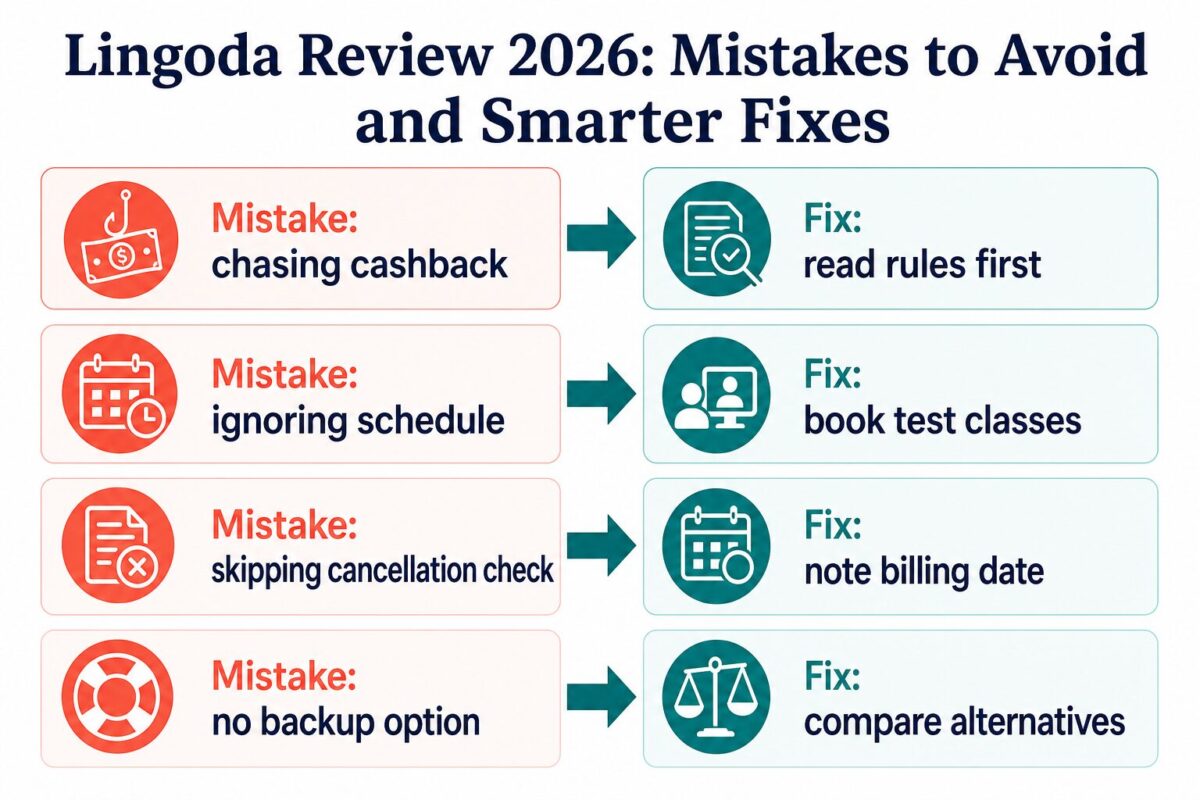
A larger plan may look efficient, but unused or rushed classes reduce the value.
Class cancellation and plan cancellation are not the same. Check both before paying.
Try normal classes first if you are unsure about class format, schedule, or teacher style.
Internal guides
Read these next if you are still comparing Lingoda
Free trial details
Understand the 7-day trial, billing timing, class limits, and cancellation checks before testing Lingoda.
Read the Lingoda free trial guidePricing guide
Compare group and private class plans, monthly cost logic, and how to avoid buying more classes than you can use.
Read the Lingoda pricing guideSprint rules
Check cancellation, attendance, cashback, and planning risks before joining a Sprint cohort.
Read the Sprint rules guideStill comparing structured classes, tutor marketplaces, and flexible speaking practice?
Compare online language platformsFAQ
Lingoda review 2026: frequently asked questions
Is Lingoda worth it in 2026?
Yes, if you want structured live classes and can book ahead consistently. It is less worth it if you need the cheapest or most spontaneous speaking practice.
Is Lingoda pricing expensive?
It can be expensive compared with casual apps or some tutor marketplaces. The value improves when you attend classes consistently and choose a plan that matches your real schedule.
Does Lingoda have a 7-day trial?
Lingoda has offered a 7-day trial with limited class credits depending on plan type. Check the current checkout screen because trial terms and availability can change.
Will the Lingoda trial renew automatically?
The official trial flow may roll into a paid subscription after the trial period. Set a reminder and cancel within the trial window if you do not want to continue.
Is Lingoda Sprint worth it?
Sprint can be worth it for highly organized learners who can follow every rule. It is risky if your schedule changes often or if you are joining mainly for cashback.
Are Lingoda teachers native speakers?
Lingoda presents its classes as teacher-led with qualified or native-level teachers. For your decision, test whether the teacher style, correction level, and class pacing fit you.
What is the best Lingoda alternative?
The best alternative depends on your priority. Choose tutor marketplaces for a specific tutor, drop-in services for flexibility, and self-study plus occasional tutoring for a lower budget.
Final recommendation
Choose Lingoda if you are ready to pay for accountability
Lingoda is not the cheapest way to hear English. It is not the most flexible way to chat online.
Its value is that it gives you scheduled, teacher-led, curriculum-based classes that can turn vague motivation into a real weekly routine.
If that is what you need, Lingoda can be worth the price. If you mostly want casual speaking volume, a favorite personal tutor, or zero booking pressure, compare alternatives first.
My final rule
Do not buy Lingoda because the plan page looks convincing. Buy it only after the trial or first classes prove that the schedule, class style, billing terms, and learning structure fit your life.
Want to compare before choosing?
Open the English learning hub